Gochujang Eggs: Discover a Flavorful Korean Delight!

gutenberg
Why You’ll Love This Gochujang Eggs
Let me tell you, Gochujang Eggs are a game-changer in my kitchen! As a busy woman juggling work, family, and a million other responsibilities, I often find myself in a cooking rut. You know the feeling—staring blankly into the fridge, wondering what to whip up for dinner that won’t take hours. That’s where these delightful eggs come in!
First off, the preparation time is a breeze. In just 20 minutes, you can have a delicious dish ready to serve. That’s right—20 minutes! It’s like a culinary miracle for those of us who feel like we’re constantly racing against the clock. Plus, the cleanup is minimal. You’ll only need a saucepan and a bowl for the ice bath. Less time scrubbing dishes means more time enjoying your meal (or catching up on your favorite show!).
Now, let’s talk about flavor. The combination of gochujang, soy sauce, and sesame oil creates a savory, slightly spicy sauce that’s simply irresistible. It’s a flavor explosion that appeals to both adults and kids alike. My picky eaters? They devour these eggs like they’re candy! Seriously, I’ve seen my kids fight over the last half of an egg, and that’s saying something.


But what I love most about Gochujang Eggs is their versatility. They can be a snack, an appetizer, or even a light meal. Feeling fancy? Serve them as an appetizer at your next gathering. Need a quick snack? Grab one from the fridge. Want a light lunch? Pair them with a salad or some rice. The possibilities are endless! And let’s be honest, who doesn’t love a dish that can do it all?
So, if you’re looking for a quick, flavorful, and family-friendly meal, Gochujang Eggs are your answer. Trust me, once you try them, you’ll wonder how you ever lived without this delightful Korean dish in your life!
Introduction to Gochujang Eggs
Welcome to the world of Gochujang Eggs, a delightful Korean dish that’s about to become your new best friend in the kitchen! If you’re like me—a busy woman balancing work, family, and a never-ending to-do list—you know how challenging it can be to whip up something quick yet delicious. Well, let me tell you, Gochujang Eggs are here to save the day!
These little gems are not just any eggs; they’re soft or hard-boiled eggs coated in a spicy and savory gochujang sauce that packs a punch of flavor. Imagine biting into a perfectly cooked egg, the creamy yolk mingling with that rich, umami sauce. It’s like a flavor party in your mouth! And the best part? You can have this dish ready in just 20 minutes. Yes, you heard that right—20 minutes!
For all the moms out there, I know how it feels to come home after a long day, exhausted and wondering what to make for dinner. Gochujang Eggs are perfect for those nights when you need something quick but don’t want to compromise on taste. They’re also a hit with the kids! My little ones can be picky eaters, but when I serve these eggs, they practically fight over them. It’s a win-win!
And let’s not forget about the professionals among us. Whether you’re working from home or heading into the office, Gochujang Eggs make for a fantastic snack or light meal. They’re easy to prepare in advance, so you can grab them on the go. Plus, they’re gluten-free, making them a great option for those with dietary restrictions.
So, if you’re looking for a quick, flavorful meal that the whole family will love, look no further than Gochujang Eggs. Trust me, once you try this delightful Korean dish, you’ll wonder how you ever lived without it!
Ingredients You’ll Need
Alright, let’s dive into the ingredients that make these Gochujang Eggs a true delight! You won’t need a long grocery list, which is perfect for us busy women who are always on the go. Here’s what you’ll need:
- 6 large eggs: The star of the show! Eggs are packed with protein and are incredibly versatile. You can use fresh eggs for the best results, as they peel more easily after boiling.
- 2 tablespoons gochujang (Korean red chili paste): This is where the magic happens! Gochujang adds a spicy, savory kick that elevates the dish. If you’re looking for a milder option, you can reduce the amount or even mix it with a bit of plain chili paste.
- 1 tablespoon soy sauce: This adds depth and umami flavor. If you’re gluten-free, feel free to swap this out for tamari, which has a similar taste without the gluten.
- 1 tablespoon sesame oil: A drizzle of this fragrant oil brings a nutty richness to the sauce. It’s a staple in Korean cooking, but if you’re out, you can use olive oil in a pinch—though it won’t have quite the same flavor.
- 1 teaspoon rice vinegar: This adds a touch of acidity to balance the flavors. If you don’t have rice vinegar, apple cider vinegar works well too, giving a slightly different but still delicious taste.
- 1 teaspoon honey: A hint of sweetness to counteract the spice! If you’re watching your sugar intake, you can reduce this or substitute it with a sugar-free sweetener.
- 1 tablespoon green onions, finely chopped: These add a fresh, crisp element to the dish. You can also use chives if that’s what you have on hand.
- 1 teaspoon sesame seeds (optional): These are a lovely garnish that adds a bit of crunch and visual appeal. If you don’t have them, don’t worry; the dish will still be fabulous without them!
Each ingredient plays a vital role in creating the perfect balance of flavors in your Gochujang Eggs. And the best part? You can easily customize this recipe based on what you have in your pantry or your dietary preferences. So, gather these ingredients, and let’s get cooking!
How to Make Gochujang Eggs
Now that you have all your ingredients ready, let’s get down to the fun part—making those delicious Gochujang Eggs! I promise, it’s as easy as pie (or should I say, as easy as eggs?). Follow these simple steps, and you’ll have a flavorful dish that will impress everyone at the table!
Step 1 – Prep Ingredients
First things first, let’s gather everything you need. You’ll want to have your ingredients and tools at the ready. Grab:
- Your 6 large eggs
- A medium saucepan for boiling
- A bowl filled with ice and cold water for the ice bath
- A whisk or fork for mixing the sauce
- A knife for slicing the eggs
- A serving plate to showcase your beautiful creation
Having everything in one place makes the cooking process smoother and more enjoyable. Trust me, you’ll thank yourself later when you’re not scrambling around the kitchen!
Step 2 – Begin Cooking
Alright, let’s get that water boiling! Fill your medium saucepan with enough water to cover the eggs and bring it to a rolling boil. Once it’s bubbling away, carefully add the eggs. I like to use a slotted spoon to lower them in gently—no one wants a cracked egg disaster!
Now, here’s where you can choose your egg destiny:
- For soft-boiled eggs: Set your timer for 6-7 minutes. You want that yolk to be creamy and luscious!
- For hard-boiled eggs: Go for 9-10 minutes. This will give you that fully cooked yolk that’s perfect for slicing.
While the eggs are cooking, you can take a moment to breathe and maybe even do a little happy dance. You’re one step closer to a delicious meal!
Step 3 – Combine Ingredients
While your eggs are happily boiling away, it’s time to prepare the ice bath. Fill a large bowl with ice and cold water. This will help stop the cooking process and make peeling the eggs a breeze.
Once your timer goes off, carefully transfer the eggs from the boiling water to the ice bath using that trusty slotted spoon. Let them cool for about 5 minutes. This is the perfect time to clean up any mess you might have made—because who wants to deal with that later?
Step 4 – Finish and Serve
Now comes the fun part—peeling those eggs! I find that peeling them under running water makes the process so much easier. The water helps to loosen the shell, and you’ll be left with perfectly smooth eggs.
Next, let’s whip up that delicious gochujang sauce! In a small bowl, whisk together the gochujang, soy sauce, sesame oil, rice vinegar, and honey until it’s nice and smooth. The aroma will have your taste buds dancing!
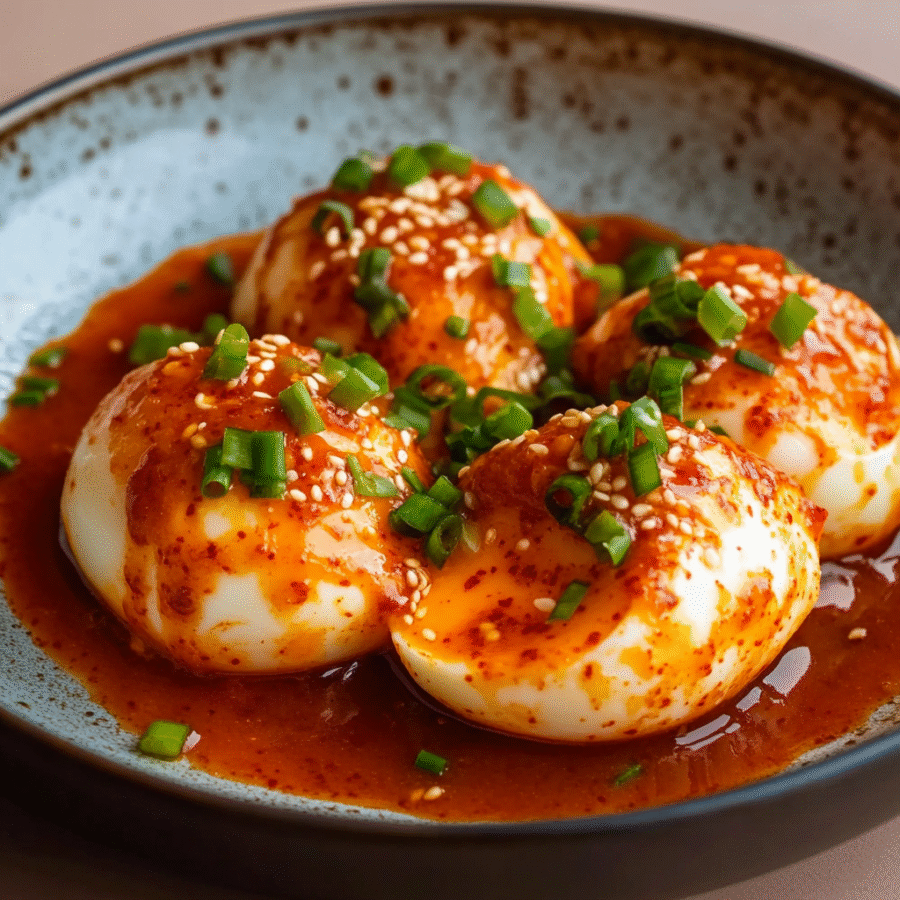
Once your eggs are peeled, slice them in half lengthwise. Place them cut-side up on your serving plate and drizzle that luscious gochujang sauce over the top. Don’t be shy—get generous with it!
Finally, sprinkle the chopped green onions and sesame seeds on top for that extra pop of flavor and color. And just like that, you’ve created a stunning dish that’s ready to be devoured!
Serve your Gochujang Eggs immediately for the best experience, or if you prefer a chilled option, pop them in the fridge for up to an hour before serving. Either way, you’re in for a treat!
Tips for Perfect Results
Now that you’re all set to make your Gochujang Eggs, let me share some tips that will help you achieve perfect results every time. Trust me, these little nuggets of wisdom come from my own kitchen adventures, and they’ll make your cooking experience even smoother!
1. Use Fresh Eggs for Easier Peeling: One of the biggest challenges with boiled eggs is peeling them without leaving half the shell behind. I’ve found that using fresh eggs makes a world of difference! Fresh eggs tend to stick to the shell less, making them easier to peel. If you can, try to use eggs that are no more than a week old. If you only have older eggs, don’t worry too much—just remember to peel them under running water for a little extra help!
2. For a Creamier Texture, Consider Adding a Dollop of Mayonnaise to the Sauce: If you’re a fan of creamy textures (and who isn’t?), try adding a dollop of mayonnaise to your gochujang sauce. It adds a rich, velvety element that complements the spicy sauce beautifully. Just whisk it in with the other ingredients, and you’ll have a sauce that’s not only delicious but also incredibly satisfying. It’s like giving your Gochujang Eggs a little hug!
3. Chill the Eggs for a Refreshing Option, Especially in Warmer Months: If you’re making Gochujang Eggs during the hot summer months, consider chilling them before serving. After you’ve boiled and peeled the eggs, pop them in the fridge for about an hour. The cool, spicy eggs make for a refreshing snack or appetizer that’s perfect for those warm days. Plus, it’s a great way to impress your guests at a summer gathering!
With these tips in your back pocket, you’ll be well on your way to mastering Gochujang Eggs. They’re not just a dish; they’re a delightful experience that brings a taste of Korea right into your home. So, roll up your sleeves, and let’s get cooking!
Essential Equipment Needed
Before we dive into making those scrumptious Gochujang Eggs, let’s talk about the essential equipment you’ll need. Don’t worry; it’s nothing fancy! Just a few basic kitchen tools that you probably already have on hand. Here’s what you’ll need:
- Medium saucepan: This is where the magic begins! You’ll need a medium-sized saucepan to boil your eggs. Make sure it’s big enough to hold all six eggs comfortably without crowding them. A good pot will help ensure even cooking, so choose one that you love!
- Bowl for ice bath: After boiling, your eggs will need a quick cool-down in an ice bath. Grab a large bowl and fill it with ice and cold water. This step is crucial for stopping the cooking process and making peeling a breeze. Plus, it’s a great excuse to use that fancy bowl you got as a wedding gift!
- Whisk or fork for mixing sauce: You’ll need something to whisk together your gochujang sauce. A simple whisk or even a fork will do the trick! Just make sure it’s sturdy enough to mix everything smoothly. You want that sauce to be perfectly blended, so it coats the eggs beautifully.
- Knife for slicing eggs: A sharp knife is essential for slicing your boiled eggs in half. You want clean cuts to showcase that beautiful yolk! If you have a serrated knife, it can work wonders for this task, but any sharp knife will do just fine.
- Serving plate: Finally, you’ll need a lovely serving plate to present your Gochujang Eggs. Choose one that makes your dish pop! After all, we eat with our eyes first, right? A colorful plate can elevate the whole experience and make your meal feel extra special.
With these essential tools at your disposal, you’re all set to create a delicious batch of Gochujang Eggs. It’s amazing how a few simple items can lead to such a flavorful dish. So, gather your equipment, and let’s get cooking!
Delicious Variations of Gochujang Eggs
Now that you’ve mastered the basic Gochujang Eggs recipe, let’s have some fun with variations! One of the best things about cooking is the ability to get creative and make a dish your own. Here are some delightful twists you can try that will keep your taste buds dancing and your family coming back for more!
Add Sliced Avocado or Cucumber for a Refreshing Side: If you’re looking to add a little freshness to your Gochujang Eggs, consider serving them with sliced avocado or cucumber. The creamy texture of avocado pairs beautifully with the spicy sauce, creating a delightful contrast. Plus, it adds a boost of healthy fats! Cucumber, on the other hand, brings a crisp, refreshing crunch that balances the richness of the eggs. Just slice them up and arrange them on the plate alongside your eggs for a colorful and nutritious addition.
Experiment with Different Sauces: While the gochujang sauce is undeniably delicious, don’t be afraid to mix things up! If you’re in the mood for a little extra heat, try adding a touch of sriracha to the sauce. It’ll give your Gochujang Eggs a fiery kick that spice lovers will adore. Alternatively, you can create a creamy sauce by mixing in some Greek yogurt or sour cream with the gochujang. This will tone down the spice while adding a rich, tangy flavor that’s simply irresistible. The beauty of this dish is that it’s versatile, so feel free to play around with different sauces until you find your perfect match!
Try Using Different Types of Vinegar: The rice vinegar in the original recipe adds a nice acidity, but why not switch things up? Experiment with different types of vinegar for a unique flavor twist. For instance, apple cider vinegar can add a fruity note, while balsamic vinegar brings a touch of sweetness. If you’re feeling adventurous, try using a flavored vinegar, like ginger or chili-infused vinegar, to add an extra layer of complexity to your sauce. Each variation will give your Gochujang Eggs a new personality, making them feel like a brand-new dish every time!
With these delicious variations, you can keep your Gochujang Eggs exciting and fresh. Whether you’re serving them for a quick snack, a light lunch, or as an appetizer for guests, these twists will elevate your dish and impress everyone at the table. So, roll up your sleeves and get creative in the kitchen—your taste buds will thank you!
Serving Suggestions
Now that you’ve whipped up a batch of Gochujang Eggs, let’s talk about how to serve them for maximum enjoyment! Presentation can elevate a dish from good to great, and these serving suggestions will help you create a delightful meal that’s as pleasing to the eye as it is to the palate.
Pair with a Simple Salad for a Light Meal: If you’re looking for a light and refreshing option, consider pairing your Gochujang Eggs with a simple salad. A mix of greens, cherry tomatoes, and a light vinaigrette complements the rich flavors of the eggs beautifully. You can toss in some sliced cucumbers or radishes for an extra crunch. The crispness of the salad balances the creamy texture of the eggs, making for a satisfying meal that won’t weigh you down. Plus, it’s a great way to sneak in some extra veggies!
Serve with Rice or Quinoa for a More Filling Option: If you’re in the mood for something heartier, serve your Gochujang Eggs over a bed of rice or quinoa. The grains soak up the delicious gochujang sauce, creating a comforting and filling dish. You can use white rice, brown rice, or even cauliflower rice for a low-carb option. Quinoa is a fantastic choice too, as it adds a nutty flavor and extra protein. This combination makes for a well-rounded meal that’s perfect for lunch or dinner. Just imagine digging into a bowl of fluffy rice topped with those beautifully sauced eggs—yum!
Offer Alongside Pickled Vegetables for a Traditional Korean Touch: To truly embrace the Korean flavors, consider serving your Gochujang Eggs with a side of pickled vegetables. Kimchi is a classic choice, but you can also try pickled cucumbers, radishes, or carrots. The tangy, spicy notes of the pickles contrast wonderfully with the savory eggs, creating a delightful balance of flavors. Plus, the crunch of the pickled veggies adds an exciting texture to your meal. It’s like a little taste of Korea right in your kitchen!
With these serving suggestions, you can transform your Gochujang Eggs into a complete meal that’s sure to impress. Whether you’re enjoying them as a light snack or a hearty dinner, these pairings will enhance the flavors and make your dining experience even more enjoyable. So, gather your loved ones, set the table, and dig in!
FAQs About Gochujang Eggs
As you embark on your culinary journey with Gochujang Eggs, you might have a few questions swirling in your mind. Don’t worry; I’ve got you covered! Here are some frequently asked questions that will help you navigate this delicious dish with ease.
Can I make Gochujang Eggs ahead of time?
Absolutely! One of the best things about Gochujang Eggs is their convenience. You can prepare them ahead of time and store them in the refrigerator for up to an hour before serving. This makes them a fantastic option for meal prep or for those busy days when you need something quick and tasty. Just remember to keep them covered to maintain their freshness!
Are Gochujang Eggs spicy?
The spice level of Gochujang Eggs can be easily adjusted to suit your taste buds. If you’re sensitive to heat, you can start with a smaller amount of gochujang and gradually increase it until you find your perfect balance. On the flip side, if you’re a spice lover, feel free to go wild with the gochujang! It’s all about making this dish work for you and your family.
Can I use other types of eggs?
Yes, indeed! While the recipe calls for large chicken eggs, you can certainly get creative. Quail eggs are a delightful alternative if you’re looking for something a bit different. They’re smaller and have a slightly richer flavor, making them a fun twist on the classic recipe. If you’re following a vegan or egg-free diet, you can also experiment with egg substitutes, like tofu or chickpea flour, to create a similar texture. The possibilities are endless!
With these FAQs in mind, you’re well-equipped to tackle Gochujang Eggs like a pro. Whether you’re making them for a quick snack, a light meal, or an impressive appetizer, you’ll find that this dish is not only delicious but also adaptable to your preferences. So, roll up your sleeves and get ready to enjoy the delightful flavors of Korean cuisine!
Final Thoughts on Gochujang Eggs
As I wrap up this delightful journey into the world of Gochujang Eggs, I can’t help but reflect on how this simple dish has become a staple in my kitchen. It’s amazing how something so easy to prepare can pack such a punch of flavor! For busy women like us, who are constantly juggling responsibilities, Gochujang Eggs are a breath of fresh air. They’re quick, delicious, and versatile—what more could we ask for?
Whether you’re looking for a quick snack, a light meal, or an impressive appetizer for guests, these eggs have got you covered. The combination of creamy yolks and that spicy, savory gochujang sauce creates a flavor experience that’s hard to resist. Plus, the fact that they can be ready in just 20 minutes means you can whip them up even on the busiest of days. It’s like having a secret weapon in your culinary arsenal!
I encourage you to give Gochujang Eggs a try. You might just find that they become a beloved addition to your recipe repertoire. Don’t be afraid to experiment with the ingredients and make them your own. Whether you add a touch of mayonnaise for creaminess or serve them with a refreshing salad, the possibilities are endless. And let’s be honest, who doesn’t love a dish that can adapt to our ever-changing schedules and tastes?
So, gather your ingredients, roll up your sleeves, and dive into the delightful taste of Korean cuisine right in your own home. I promise you won’t regret it! Once you experience the joy of Gochujang Eggs, you’ll wonder how you ever lived without them. Happy cooking!
“`
Print Gochujang Eggs: Discover a Flavorful Korean Delight!
- Total Time: 20 minutes
- Yield: 3 servings (2 eggs per serving) 1x
- Diet: Gluten Free
Description
Gochujang Eggs are a delicious Korean dish featuring soft or hard-boiled eggs coated in a spicy and savory gochujang sauce.
Ingredients
- 6 large eggs
- 2 tablespoons gochujang (Korean red chili paste)
- 1 tablespoon soy sauce
- 1 tablespoon sesame oil
- 1 teaspoon rice vinegar
- 1 teaspoon honey
- 1 tablespoon green onions, finely chopped
- 1 teaspoon sesame seeds (optional)
Instructions
- In a medium saucepan, bring water to a boil. Carefully add the eggs and boil for 6-7 minutes for soft-boiled eggs or 9-10 minutes for hard-boiled eggs.
- While the eggs are boiling, prepare an ice bath by filling a bowl with ice and cold water.
- Once the eggs are done boiling, transfer them to the ice bath and let them cool for about 5 minutes.
- Peel the eggs gently under running water to make the process easier.
- In a small bowl, whisk together the gochujang, soy sauce, sesame oil, rice vinegar, and honey until smooth.
- Slice the peeled eggs in half and drizzle the gochujang sauce over the cut sides.
- Garnish with chopped green onions and sesame seeds, if using.
- Serve immediately or refrigerate for up to 1 hour before serving for a chilled option.
Notes
- For a creamier texture, add a dollop of mayonnaise to the gochujang sauce.
- Try adding sliced avocado or cucumber on the side for a refreshing contrast.
- Prep Time: 10 minutes
- Cook Time: 10 minutes
- Category: Appetizer
- Method: Boiling
- Cuisine: Korean
Nutrition
- Serving Size: 2 eggs
- Calories: 180
- Sugar: 1g
- Sodium: 500mg
- Fat: 12g
- Saturated Fat: 2g
- Unsaturated Fat: 10g
- Trans Fat: 0g
- Carbohydrates: 4g
- Fiber: 0g
- Protein: 12g
- Cholesterol: 370mg
Keywords: Gochujang Eggs, Korean Eggs, Spicy Eggs


